North Bangalore vs South Bangalore Which Is Better to Buy in 2026?

For 2026, North Bangalore is the better buy for township-scale new launches, airport-led demand and future infrastructure, while South Bangalore is the better buy for established neighbourhoods, mature social infrastructure and a settled, green address. North Bangalore is the airport growth corridor, led by pockets like Devanahalli, Yelahanka and Hebbal, where large land parcels are filling with new towers from roughly ₹6,000–11,000 per sq ft depending on the pocket. South Bangalore, spanning belts such as Jayanagar, JP Nagar, Bannerghatta Road, Kanakapura Road and Electronic City, is an older, more built-up part of the city where prices run from about ₹6,000–14,000 per sq ft, with core areas the dearest.
Both zones sit within Bengaluru but pull on very different engines: the North is a newer corridor built around the airport, aerospace SEZ and business parks, while the South is a mature residential half of the city anchored by established jobs, schools and hospitals. This guide compares them on price, connectivity, jobs, growth drivers and rental yield, then says who each one suits. For the wider area picture on the North side, read the Devanahalli real estate guide.
North Bangalore vs South Bangalore 2026 Comparison Overview
The table sets the two zones side by side on the points buyers ask about most.
| Factor | North Bangalore | South Bangalore |
|---|---|---|
| Position | Airport growth corridor, newer North | Established residential belt, mature South |
| Apartment price (indicative) | ~₹6,000–11,000/sq ft across pockets | ~₹6,000–14,000/sq ft, core areas dearer |
| Supply type | Township-scale new launches on large land parcels | Mostly established stock, limited new large land in the core |
| Employment hubs | Airport, aerospace SEZ, Manyata and business parks | Electronic City, Bannerghatta Road, established offices |
| Connectivity | NH-44, airport, planned airport metro, STRR and PRR | Established metro lines, NICE Road, mature arterials |
| Growth drivers | Airport, SEZ, new roads and rail, greenfield supply | Mature demand, social infrastructure, Electronic City |
| Best for | New-launch buyers, long-term investors | End users wanting an established neighbourhood |
Prices indicative, as of July 2026 — verify the current cost sheet with the developer.
What Should Drive the North vs South Bangalore Choice?
The North vs South Bangalore choice comes down to budget, how settled you want your address to be and which growth story you back. North Bangalore trades an emerging, still-building feel for branded new townships, airport-led demand, a deep pipeline of fresh supply and pending infrastructure; South Bangalore trades limited new large-format supply for established neighbourhoods, mature schools, hospitals and retail already running, and the stability of proven demand.
Weigh four points before you decide:
- Address type: the North offers new townships; the South offers settled, established localities.
- Infrastructure now: the South has more social infrastructure already in place; the North is still catching up.
- Growth headroom: the North's airport corridor carries more new-supply and infrastructure upside.
- Budget fit: compare like-for-like pockets, since both zones span value and higher-priced areas.
Bottom line: buy North Bangalore for new-township scale and growth, South Bangalore for an established, ready neighbourhood.
North Bangalore The Airport-Corridor Growth Bet
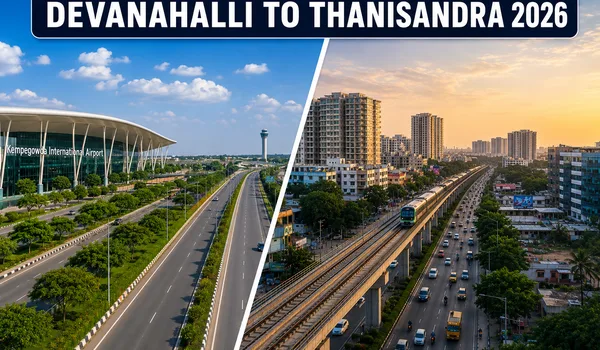
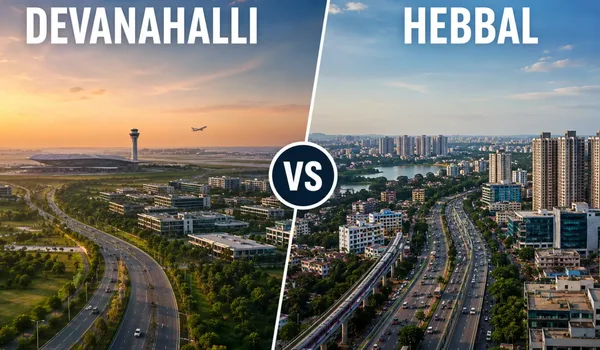
North Bangalore is the city's newest growth half, stretching from Hebbal and Yelahanka up the airport corridor to Devanahalli, wrapped around Kempegowda International Airport. Large land parcels here have pulled in township-scale launches at prices often below the established city core, which is why the North leads on branded new supply and on wide, planned road grids.
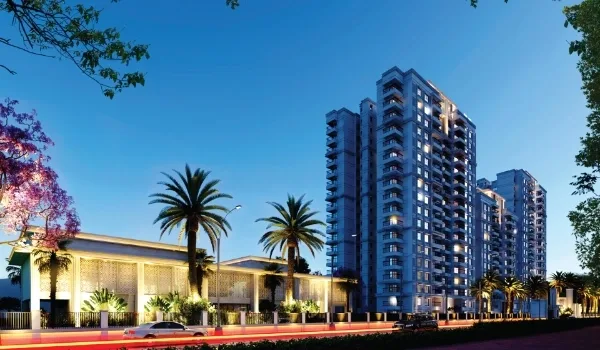
The growth case rests on real infrastructure: the airport itself, the KIADB Aerospace SEZ, business parks, the Manyata belt near Hebbal, plus NH-44, the planned airport metro line and proposed ring roads. New 2 and 3 BHK launches sit around ₹6,000–11,000 per sq ft across pockets, with prime addresses pricing higher. The lead pre-launch on the far-north belt is Godrej Devanahalli by Godrej Properties, with 2 and 3 BHK homes from about ₹1.18 crore.
- Entry price: value-led new launches at township scale on the airport belt
- Supply: deep pipeline of townships and under-construction towers
- Risk: newer corridor; some infrastructure and demand is still future-dated
- RERA: launched projects carry K-RERA numbers; pre-launch projects file at official launch
For unit-level detail on the lead project, see the Godrej Devanahalli price list and floor plans.
Bottom line: North Bangalore is the branded, growth-led pick — newer feel today, more new supply, wide roads and airport-led upside.
South Bangalore The Established and Settled Pick
South Bangalore is the older, more built-up half of the city, spanning long-settled residential belts such as Jayanagar, JP Nagar, Basavanagudi, BTM Layout, Bannerghatta Road and Kanakapura Road, along with the Electronic City tech hub on its far edge. Known for tree-lined streets, established markets, temples, parks and some of the city's oldest schools and hospitals, its property story is mostly resale and infill supply in the core, with newer launches concentrated on the outer Kanakapura Road and Electronic City stretches.
Because so much of the South is already built, apartment values run from roughly ₹6,000–14,000 per sq ft, with prime central pockets the dearest and outer belts more affordable. Established metro lines, NICE Road and mature arterials give the zone strong connectivity, and the depth of schools, hospitals and retail is a genuine draw for end users, but the trade-offs are limited large-format new supply in the core, older infrastructure in places, and traffic on the busiest corridors. It suits buyers who value a settled, ready neighbourhood over greenfield growth.
- Entry price: wide range, from value outer belts to dear central pockets
- Supply: mostly established stock and infill, with new launches on the outer edges
- Strength: mature social infrastructure, established connectivity and proven demand
- Trade-off: limited new large-format supply in the core and traffic on busy corridors
Bottom line: South Bangalore is the settled, established pick — deep social infrastructure and proven demand, but less greenfield new supply in the core.
Which Should You Buy in 2026?
Buy North Bangalore if you want township-scale branded apartments, the widest choice of new launches, airport-led demand, pending infrastructure that can lift value over time, and you are comfortable with a newer corridor that is still filling in. Buy South Bangalore if your priority is an established, ready neighbourhood with mature schools, hospitals and retail, settled connectivity and proven demand, and you are comfortable with limited new large-format supply and higher prices in the central pockets.
For investors chasing new supply and future infrastructure, the North wins on scale and headroom. For end users who want to move into a settled address with everything already running, the South wins on maturity and stability. Weigh the prices in the specific pockets you like, your commute to work, and your timeline, then shortlist a project on the side that fits.
Bottom line: North Bangalore for new-township scale and growth, South Bangalore for an established, ready neighbourhood — pick by your budget and horizon.
Frequently Asked Questions
1. Which is better to buy in 2026, North or South Bangalore?
North Bangalore for new township launches, airport-led growth and future upside; South Bangalore for established neighbourhoods, mature social infrastructure and greenery. The right pick depends on whether you want new supply and growth or a settled, ready address.
2. Is North Bangalore cheaper than South Bangalore?
It depends on the pocket. Entry-level new launches on the airport belt like Devanahalli can be cheaper than core South Bangalore, while prime pockets in both zones run higher. Compare like for like within each zone rather than zone against zone.
3. Which zone has better connectivity?
South Bangalore has a longer-established metro and arterial road network, while North Bangalore is catching up fast with the airport, NH-44, the upcoming airport metro line and the planned ring roads.
4. Which zone gives better rental yield?
Both are broadly similar. North Bangalore draws airport, aerospace and business-park tenants, while South Bangalore draws Electronic City and established-office tenants, so yield depends more on the specific project than the zone.
5. Which zone is better for long-term investment?
North Bangalore's airport corridor has more new supply and pending infrastructure, so it often carries more headroom for appreciation; South Bangalore offers stability and established, proven demand. The choice depends on your risk appetite and horizon.
6. Where does Devanahalli fit in this comparison?
Devanahalli is the flagship of the North Bangalore airport corridor, offering township-scale branded launches next to Kempegowda International Airport, and is the pocket most buyers weigh when they choose the North for growth.
Conclusion
North and South Bangalore sit within one city but answer very different buyer needs. North Bangalore wins on township-scale branded new launches, airport-led demand, wide new road grids and long-term growth, which is why investors and buyers chasing fresh supply lean its way. South Bangalore wins on established neighbourhoods, deep social infrastructure, settled connectivity and proven demand, which suits end users who want to move into a ready, mature address. Set your budget and time horizon, compare the specific pockets you like on the same basis, shortlist a project on the side that fits, and book a site visit before you decide.
Godrej Devanahalli Blog