Home Loan & EMI Guide for Devanahalli Buyers 2026
For a Devanahalli apartment in 2026, banks fund up to about 75–90% of the value at indicative interest rates of 8.3–9.5%, with the EMI capped near 40–50% of your net monthly income. As a rough guide, a ₹1 crore loan over 20 years at 8.5% costs about ₹87,000 a month. Your final EMI depends on the loan amount, tenure, rate and credit score.
This guide explains home loan eligibility, LTV, rates and indicative EMIs for buying in Devanahalli, plus the documents, tax benefits and ways to lower your EMI. For the underlying ticket sizes, pair it with the Godrej Devanahalli price list.
Indicative Home Loan EMI by Ticket Size (2026)
The table shows approximate EMIs at an indicative 8.5% over 20 years, before processing fees and insurance.
| Loan amount | EMI @ 8.5%, 20 yr | EMI @ 8.5%, 25 yr | Indicative income needed |
|---|---|---|---|
| ₹50 L | ~₹43,400 | ~₹40,300 | ~₹1.0–1.1 L/month |
| ₹75 L | ~₹65,100 | ~₹60,400 | ~₹1.5–1.7 L/month |
| ₹1 Cr | ~₹86,800 | ~₹80,500 | ~₹2.0–2.2 L/month |
| ₹1.5 Cr | ~₹1,30,200 | ~₹1,20,800 | ~₹3.0–3.3 L/month |
EMIs indicative, as of June 2026 — computed at 8.5% for illustration; confirm the live rate, fees and your eligibility with the lender.
How Much Home Loan Can You Get?
Two limits decide your loan: the loan-to-value (LTV) cap on the property, and your repayment capacity. Banks fund up to 90% of value for smaller loans and around 75–80% for larger ones, so you arrange the balance plus stamp duty and registration as down payment.
On capacity, lenders keep your total EMIs within roughly 40–50% of net monthly income, so existing loans and card dues reduce what you can borrow. A clean credit score above 750, stable employment and co-applicant income all raise the sanctioned amount.
- LTV: up to ~90% on small loans, ~75–80% on larger tickets
- FOIR: all EMIs capped near 40–50% of net income
- Credit score: 750+ earns a better rate and a higher sanction
- Co-applicant: adding a spouse's income lifts eligibility
Bottom line: your loan is the lower of the LTV cap and what your income comfortably services — clear small debts first to borrow more.
Interest Rates, Tenure and How the EMI Moves
Home loan rates in 2026 broadly run 8.3–9.5% for salaried borrowers, set by the lender's benchmark plus a spread that depends on your credit profile and loan size. Most loans are floating, so the EMI or tenure shifts when the benchmark changes; fixed-rate options cost a little more for certainty.
Tenure is the other big lever. A longer tenure cuts the monthly EMI but raises total interest paid; a shorter tenure does the reverse. Pick the tenure that keeps the EMI comfortable without stretching interest needlessly.
- Rate band: ~8.3–9.5% in 2026, lower for strong credit profiles
- Floating vs fixed: floating tracks the benchmark; fixed buys certainty at a premium
- Tenure trade-off: longer = lower EMI but more total interest
- Reset: on floating loans, ask whether resets change the EMI or the tenure
Bottom line: negotiate the spread on your credit score and choose a tenure that balances a comfortable EMI against total interest.
Documents, Eligibility and Tax Benefits
A home loan file has three parts: KYC, income proof and property papers. Salaried buyers submit PAN, Aadhaar, salary slips, Form 16 and bank statements; self-employed buyers add business proof, ITRs and financials. The lender also vets the project, so a K-RERA-registered development clears faster.
A home loan also carries tax benefits under the old regime — principal repayment qualifies under Section 80C up to ₹1.5 lakh a year, and interest under Section 24(b) up to ₹2 lakh a year for a self-occupied home. Compare the old and new regimes before you decide which to claim under.
- KYC: PAN, Aadhaar and address proof for each applicant
- Income proof: salary slips, Form 16 / ITR and bank statements
- Property papers: sale agreement, builder documents and the K-RERA number
- Tax: 80C on principal, 24(b) on interest under the old regime
Bottom line: keep KYC, income and RERA-backed property papers ready, and weigh the tax benefit against the regime you file under.
How to Lower Your EMI on a Devanahalli Home
Devanahalli's value pricing already helps the maths — a lower ticket means a smaller loan than the established city for the same configuration. The lead pre-launch on the belt, Godrej Devanahalli by Godrej Properties, offers 2 and 3 BHK homes from about ₹1.18 crore, so you can size the loan to your budget.
Beyond the ticket, several moves cut the EMI or the interest you pay over the life of the loan. Run them before and after you borrow.
- Bigger down payment: a larger upfront share shrinks the loan and the EMI
- Better credit score: a higher score earns a lower rate
- Balance transfer: move to a cheaper lender if your rate drifts above the market
- Part-prepayment: lump sums cut the principal, shortening tenure or lowering EMI
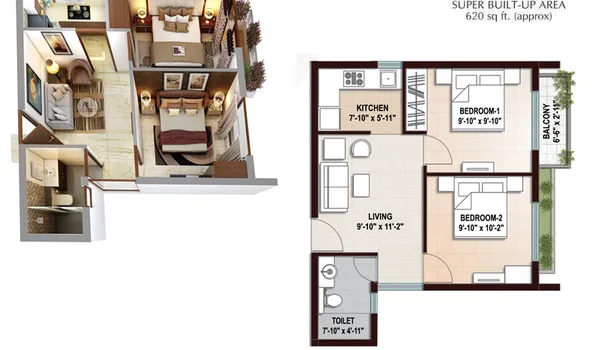
Match the loan to the home using the floor plans, and weigh the long-term return in the rental yield and ROI guide.
Bottom line: a keener entry price, a healthy down payment, a strong credit score and timely prepayments give you the lowest workable EMI.
Frequently Asked Questions
1. How much home loan can I get to buy in Devanahalli?
Banks fund up to about 75 to 90 percent of the property value as a home loan, depending on the ticket size, and you pay the rest as down payment. The exact amount also depends on your income, existing EMIs and credit score, since lenders cap the EMI at roughly 40 to 50 percent of your net monthly income.
2. What is the EMI on a 1 crore home loan in Devanahalli?
At an indicative 8.5 percent over 20 years, a ₹1 crore home loan works out to roughly ₹87,000 a month. The EMI falls if you choose a longer tenure or make a larger down payment, and rises with a higher interest rate, so confirm the live rate with your lender.
3. What interest rate applies to Devanahalli home loans in 2026?
Home loan interest rates in 2026 sit broadly in the 8.3 to 9.5 percent range for salaried borrowers, varying by lender, credit score, loan amount and whether the rate is floating or fixed. A strong credit score and stable income help you negotiate the lower end of the band.
4. What documents do I need for a Devanahalli home loan?
Lenders ask for KYC documents (PAN, Aadhaar, address proof), income proof (salary slips, Form 16 or ITR and bank statements), employment proof, and the property papers including the sale agreement and the project's K-RERA registration. Self-employed buyers add business and financial statements.
5. What tax benefits come with a home loan?
Under the old tax regime, a home loan offers deductions on principal repayment under Section 80C up to ₹1.5 lakh a year, and on interest under Section 24(b) up to ₹2 lakh a year for a self-occupied home. Benefits differ under the new regime, so check which regime suits you before claiming.
6. How can I reduce my home loan EMI?
You can lower the EMI with a larger down payment, a longer tenure, a better credit score that earns a lower rate, or by balance-transferring to a cheaper lender. Part-prepayments reduce the principal and either shorten the tenure or cut the EMI, saving interest over the life of the loan.
Conclusion
A home loan turns a Devanahalli purchase into a manageable monthly commitment, and the area's value pricing keeps the loan and EMI lower than the established city for the same configuration. Get the basics right — a 750-plus credit score, EMIs within 40–50% of income, a healthy down payment and a K-RERA-registered project — and you secure a competitive rate. Use the indicative EMI table to size your budget, claim the tax benefits that fit your regime, and prepay when you can to cut total interest. Confirm the live rate and your eligibility with the lender before you book.
Godrej Devanahalli Blog