Monsoon, Drainage and Flood Resilience Guide for Devanahalli Apartments 2026
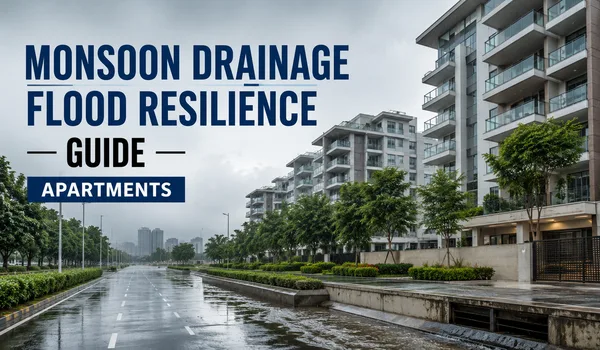
Bengaluru's monsoons regularly test which projects were built to handle rain and which were not, and on a fast-building corridor like Devanahalli that question deserves a close look before you buy. How a site is graded, how its storm-water drains are laid, whether the basement is protected and whether rainwater harvesting actually works all decide whether the monsoon passes quietly or turns roads, basements and common areas into a problem. The good news is that Devanahalli sits on the city's relatively elevated northern plateau, which drains better than the low-lying pockets that flood in the city; the caveat is that rapid new construction can still create local waterlogging, so a project's own design matters.
This guide explains how monsoon drainage and flood resilience work in a new project near Devanahalli: site levels and grading, storm-water drains, basement protection, rainwater harvesting and approach-road drainage, plus what to confirm before you sign. Read it alongside the water supply and utilities guide, since drainage and water systems share the same site services.
Devanahalli Monsoon and Drainage Overview
The table groups the drainage and flood-resilience points buyers meet in new projects and what each one covers.
| Item | How it usually works | What to check |
|---|---|---|
| Site level and grading | Land shaped so water flows away from buildings | Whether the site sits high and slopes to the drains |
| Storm-water drains | Internal drain network carrying rain off the site | The drain layout, size and outfall point |
| Basement protection | Raised ramps, kerbs and sump pumps with backup | Ramp height, pumps and power backup for them |
| Rainwater harvesting | Recharge pits and wells absorbing site rainfall | Whether it is installed, sized and maintained |
| Approach-road drainage | Roadside drains on the access road to the project | Whether the approach road waterlogs in heavy rain |
| Sewage and STP in rain | STP and sewer lines coping with monsoon inflow | Whether the system backs up during heavy rain |
Guidance indicative, as of July 2026 — confirm the drainage design, basement protection and rainwater-harvesting status with the developer or association before you rely on them.
How Drainage Works, and What to Look For
Flood resilience starts with the ground itself: a project built on well-graded land that sits high and slopes towards its drains sheds rain far better than a low, flat site where water pools. The internal storm-water network is the next layer, a system of drains sized to carry a heavy downpour off the roads and podiums to a proper outfall; undersized or poorly connected drains are where surface flooding begins. The basement is the most vulnerable point, so look for raised ramp entries, kerbs at the openings and sump pumps backed by power, all of which keep water out when the rain is heavy. The lead pre-launch on the corridor, Godrej Devanahalli by Godrej Properties, is a township-style project where planned site grading and storm-water drainage are the usual pattern.
Look beyond the brochure to how the site behaves in rain. The approach road matters as much as the project: a well-drained tower is little comfort if the access road floods and cuts you off, so check the roadside drains on the way in. Rainwater harvesting, when genuinely installed and maintained, absorbs part of the rain that falls on the site, eases the storm-water load and recharges groundwater, so confirm it is real rather than only on paper. The surest test is timing: if you can, visit during or just after heavy rain and see where the water goes.
- Grading: a site that sits high and slopes to its drains sheds rain best
- Storm-water: confirm the drain network is sized for a heavy downpour
- Basement: raised ramps, kerbs and backed-up sump pumps keep water out
- Approach road: check the access road does not waterlog and cut you off
Bottom line: judge drainage by site grading, storm-water capacity, basement protection and the approach road, not just the brochure.
Rainwater, Sewage and Long-Term Resilience
Beyond keeping rain out, a resilient project manages where the water goes and how the wet-weather load is handled over the years. Rainwater harvesting pits and recharge wells are the first tool, absorbing site rainfall so less of it rushes into the drains and more of it replenishes groundwater, which also supports water security in the dry months; the key is that the system is sized sensibly and actually maintained, not just shown on the plan. The sewage and STP system is the second, since a treatment plant and sewer lines that back up during heavy rain create their own mess, so it is worth asking how the STP copes when inflow spikes in the monsoon.
Long-term resilience is really about upkeep. Drains silt up, pumps fail and recharge pits clog if they are not cleaned before each monsoon, so the association's maintenance discipline decides whether good design keeps working. Because drainage, pumps, the STP and common areas all draw on the same services and budget, it pays to read this next to the green and sustainable apartments guide, since rainwater harvesting and water recycling sit at the overlap of resilience and running cost.
- Rainwater harvesting: confirm pits and recharge wells are sized and maintained
- Sewage and STP: ask how the system copes with monsoon inflow spikes
- Maintenance: pre-monsoon cleaning of drains and pumps keeps design working
- Water security: good recharge also supports supply in the dry months
Bottom line: favour projects with real rainwater harvesting, a monsoon-ready STP and a maintenance routine that keeps the drainage working year after year.
Turning Drainage Into a Decision
Before you sign, get the drainage and flood-resilience position in writing rather than trusting a verbal assurance. Confirm the site levels and grading, the storm-water drain layout and outfall, the basement flood protection, the approach-road drainage and that rainwater harvesting and the STP are genuinely functional. If you are buying a ground-floor or basement-adjacent unit, or the site sits lower than its surroundings, treat drainage as a make-or-break rather than a detail, since water problems there are expensive and disruptive to fix later.
Then weigh drainage as part of the whole home, not an afterthought. A well-graded, well-drained project stays usable and dry through the monsoon and protects both comfort and resale, whereas chronic waterlogging, a flood-prone basement or a road that cuts off in the rain become a lasting irritation. Favour a project that has clearly designed for rain, compare shortlisted options on the same basis, and if you can, visit during or just after heavy rain before you commit.
Bottom line: get drainage in writing, treat it as critical for low or basement-adjacent units, and let a rainy-day visit guide the choice.
Frequently Asked Questions
1. Does Devanahalli flood during the monsoon?
Devanahalli sits on Bengaluru's relatively elevated northern plateau, so it is less prone to the severe waterlogging seen in the city's low-lying pockets. Even so, rapid new construction can create local waterlogging, so a project's own drainage design still matters.
2. What drainage features should I check before buying an apartment?
Check the site grading and levels, the internal storm-water drain network, basement flood protection such as ramps and sump pumps, the condition of the approach-road drains, and whether rainwater harvesting is genuinely functional rather than only on paper.
3. Are basements safe from flooding in Devanahalli apartments?
They can be, if the project is designed for it. Look for raised ramp entries, kerbs, sump pumps with backup power and good site grading that carries water away from the basement. Poorly graded sites are where basement flooding usually starts.
4. Does rainwater harvesting help with flood resilience?
Yes, indirectly. Rainwater harvesting pits and recharge wells absorb part of the rain that falls on the site, easing the load on storm-water drains and recharging groundwater. Confirm the system is installed, sized sensibly and actually maintained.
5. How does drainage affect apartment value and daily life?
Good drainage keeps roads, basements and common areas usable through the monsoon and avoids damp, seepage and repair costs, which protects both liveability and resale. Chronic waterlogging is a lasting irritation and a drag on value.
6. What monsoon details should I confirm before buying?
Confirm the site levels and grading, the storm-water drain layout, basement flood protection, the approach-road drainage, and that rainwater harvesting and the STP are functional. Visiting during or just after heavy rain is the surest test.
Conclusion
On the Devanahalli corridor, monsoon drainage and flood resilience are practical liveability questions that shape daily life long after the purchase. Devanahalli's elevated northern plateau gives it a natural head start over the city's low-lying flood pockets, but a project still lives or struggles on its own design: how the site is graded, how its storm-water drains are sized, whether the basement is protected and whether rainwater harvesting and the STP genuinely work. Favour projects that have clearly designed for rain, confirm the approach road stays passable, and remember that upkeep before each monsoon is what keeps good design working. Get the details in writing, visit in the rain if you can, and judge a project on how it handles a downpour, not just how it looks on a dry day.
Godrej Devanahalli Blog