Parking and EV Charging Guide for Devanahalli Apartments 2026
Parking is one of the quieter deal-breakers in an apartment purchase, and on the Devanahalli corridor, where families often run two vehicles and electric cars are rising fast, it deserves real attention. How many spaces your unit gets, whether they are covered or on a stack system, how much visitor parking the project provides and whether the bays are ready for an EV charger all shape daily life long after possession. In 2026, with EV adoption climbing across Bengaluru, a project's parking and charging plan is as much a liveability question as its clubhouse.
This guide explains how parking and EV charging work in a new project near Devanahalli: parking ratios and types, visitor parking, EV-charging provisioning and load, running cost and society rules, and what to confirm before you sign. Read it alongside the water supply and utilities guide, since parking and charging draw on the same building services and electrical load.
Devanahalli Parking and EV Charging Overview
The table groups the parking and charging points buyers meet in new projects and what each one covers.
| Item | How it usually works | What to check |
|---|---|---|
| Parking allotment | One covered space per home, two for larger units | Exactly how many spaces your unit includes |
| Covered vs stack | Basement or podium bays, or mechanical stack systems | The type allotted and its ease of daily use |
| Visitor parking | A shared ratio of bays for guests | The visitor ratio and the society rules |
| EV provisioning | Conduit, load and points ready in the parking areas | Whether your own bay is charger-ready |
| EV charging use | Chargers at select bays or in-bay installation | How charging electricity is metered and billed |
| Two-wheeler parking | Separate allotted or shared two-wheeler bays | Whether a slot is included and where it sits |
Guidance indicative, as of July 2026 — confirm the exact parking allotment, EV provisioning and billing with the developer or association before you rely on them.
How Parking Works, and What to Look For
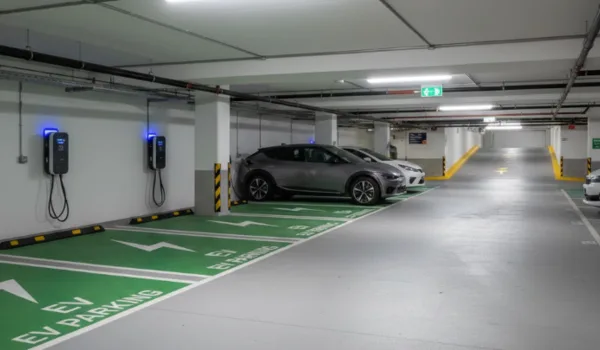
Most 2 and 3 BHK homes on the corridor come with one covered car space, with larger or premium units sometimes offering two, so the first thing to pin down is exactly how many spaces your unit includes and whether they are covered basement or podium bays or open surface spots. In dense projects, developers often use stack or puzzle parking, a mechanical system that holds cars on two levels to save space; it works, but it is slower to use, needs regular servicing and can frustrate residents in a hurry, so it is worth knowing which type you are allotted. Visitor parking matters just as much in a large community: too few guest bays and the internal roads and driveways clog quickly, so check the visitor ratio and the rules that govern it. The lead pre-launch on the corridor, Godrej Devanahalli by Godrej Properties, is a township-style project where basement and podium parking with visitor provision is the usual pattern.
Look beyond the headline count to how the parking actually lives. Wide, well-lit basements with easy circulation beat tight, awkward bays with pillars in the wrong place, and a sensible ratio of visitor spaces prevents daily disputes. Two-wheeler parking, often a separate allotment, should be confirmed too, especially for households with a scooter alongside the car. On your site visit, walk the parking levels if you can, note the bay size and access ramps, and picture the daily in-and-out rather than just the number on the brochure.
- Allotment: confirm the exact number of spaces and whether they are covered
- Type: basement or podium bays are easier than stack or puzzle systems
- Visitor parking: a healthy guest ratio keeps internal roads clear
- Two-wheeler: check whether a slot is included and where it sits
Bottom line: pin down how many spaces you get and their type, and weigh visitor parking and daily access, not just the count.
EV Charging, Load and Running Cost
Electric vehicles are the fast-changing part of the parking question, and a project's readiness for them affects both convenience and future value. Many new township projects now provide EV-charging provisioning, meaning conduit, electrical load and points are laid into the parking areas, with some offering chargers at select shared bays and others allowing residents to install a charger in their own bay. The key is provisioning: retrofitting charging into a project that never planned for the load is difficult, so a project that has designed for EVs from the start is far easier to live with. Ask whether your own bay is charger-ready, how the shared electrical load is managed and whether the wiring supports in-bay installation.
On running cost and rules, charging electricity is usually metered and billed to you, either through a dedicated meter or the association's system, so confirm how it is measured and what tariff applies. Installing your own charger typically needs association approval, since it draws on shared load and metering, and larger societies set rules to keep the system fair and safe. Because charging, lifts, pumps and common areas all pull on the same building services, it pays to read this next to the maintenance charges and sinking fund guide, since how the project manages load and upkeep feeds into your monthly cost.
- Provisioning: designed-in load and conduit beat a difficult retrofit
- Bay readiness: confirm whether your own space is charger-ready
- Billing: check how charging electricity is metered and what tariff applies
- Rules: in-bay chargers usually need association approval and managed load
Bottom line: favour projects that provisioned for EVs from the start, and confirm bay readiness, billing and society rules before you rely on charging.
Turning Parking Into a Decision
Before you sign, get the parking and charging position in writing rather than trusting a verbal assurance. Confirm how many spaces your unit gets and whether they are covered or stack, the visitor ratio, whether EV charging is provisioned in your own bay, how charging electricity is billed and the society rules on adding a charger later. If you already own or plan to buy an electric car, treat charger-ready parking as a near-essential rather than a nice-to-have, since it is expensive and disruptive to add afterwards.
Then weigh parking as part of the whole home, not an afterthought. Comfortable, well-planned parking with room for guests and a clear EV path quietly improves daily life and protects resale as electric adoption grows, whereas cramped bays, heavy reliance on stack systems and no charging plan become a lasting irritation. Favour a project that has thought parking and charging through, compare shortlisted options on the same basis, and book a site visit to walk the parking levels before you commit.
Bottom line: get parking and EV charging in writing, treat charger-ready bays as essential for an EV, and let daily access guide the choice.
Frequently Asked Questions
1. How many parking spaces does a Devanahalli apartment usually get?
Most 2 and 3 BHK homes come with one covered car space, with some larger units offering two. The ratio varies by project, so confirm exactly how many spaces your unit includes and whether they are covered or open.
2. What is the difference between covered and stack parking?
Covered parking is a dedicated bay in a basement or podium; stack or puzzle parking uses a mechanical system to hold cars on two levels to save space. Stack parking is common in dense projects but is slower to use and needs upkeep.
3. Do Devanahalli apartments provide EV charging?
Many new township projects now provide EV-charging provisioning, at least conduit and load in the parking areas, with some offering chargers at select bays. Confirm whether your own bay is charger-ready and how the electricity is billed.
4. Can I install my own EV charger in an apartment?
Usually only with the association's approval, since it draws on shared electrical load and metering. Ask whether the project allows in-bay chargers, how the load is managed and whether the wiring is provisioned for it from the start.
5. Is visitor parking important in a large project?
Yes. Adequate visitor parking keeps driveways and roads clear in a big community, so check the visitor ratio and rules. Too little visitor space is a common source of daily friction in dense projects.
6. What parking and EV details should I confirm before buying?
Confirm how many spaces your unit gets and whether they are covered or stack, the visitor ratio, whether EV charging is provisioned in your bay, how charging electricity is billed and the society rules on adding a charger later.
Conclusion
On the Devanahalli corridor, parking and EV charging are practical liveability questions that shape daily life long after the purchase. Pin down how many spaces your unit gets and whether they are comfortable covered bays or a mechanical stack system, check that visitor parking is generous enough to keep internal roads clear, and treat EV readiness as increasingly essential as electric cars spread across Bengaluru. Favour projects that provisioned for charging load from the start, confirm how charging is billed and what the society allows, and read parking alongside the building services and running cost it draws on. Get the details in writing, walk the parking levels on your site visit, and judge a project on how it will drive day to day, not just the number on the brochure.
Godrej Devanahalli Blog